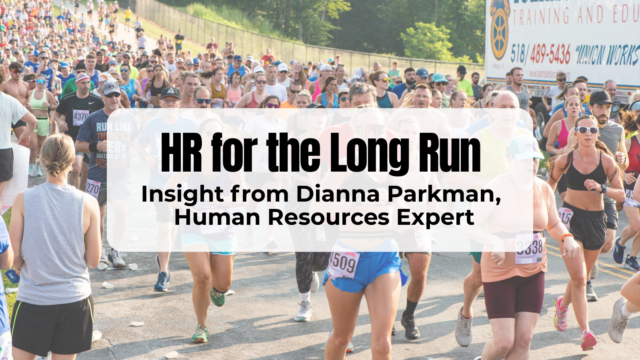
By Dianna Parkman, Running USA Human Resources Consultant
Got HR questions? Dianna Parkman is available as a resource! Active members of Running USA can email her at humanresources@runningusa.org to set up a consultation call.
In the running industry, a successful event begins long before the starting gun goes off. It begins with communication. Whether you lead a running club, manage a race organization, coordinate volunteers, oversee race-day operations, or support marketing and customer service, every role contributes to the runner’s experience. Yet even the strongest teams can face challenges when priorities are unclear, information is shared too late, or departments operate in silos.
From an HR perspective, effective communication with leadership is essential to building trust, strengthening employee engagement, and ensuring teams have the clarity, resources, and support they need to deliver their best work.
Race directors need timely updates on permits, course logistics, budgets, and staffing; communications and marketing teams need accurate information to promote the event and respond to changing conditions; customer service teams need consistent answers about registration, packet pickup, race policies, and participant concerns; and operations teams need clear timelines, contingency plans, and decisions they can act on.
When these teams communicate openly with leadership, potential problems can be identified earlier, resources can be allocated more effectively, and the entire organization can work toward a shared goal. Leaders, in turn, must create an environment where team members feel comfortable raising concerns, advocating for additional support, sharing progress, and recommending improvements.
One practical way to establish this culture is through a pre-race engagement discussion that brings the appropriate teams and leaders together to confirm responsibilities, identify risks, review communication protocols, and ensure everyone is prepared for race day. Following the event, a post-race debrief or after-action review provides an opportunity to celebrate successes, discuss what did not go as planned, gather feedback from staff and volunteers, and identify actionable improvements for the next event. These conversations should focus on learning and solutions rather than blame.
Ultimately, effective communication is more than an operational tool; it is a people strategy. When employees, volunteers, and leaders feel informed, heard, and supported, they are better equipped to collaborate, solve problems, serve participants, and deliver the memorable race experiences that keep runners coming back.
Let’s put it into practice! Keep leadership updates concise and solution focused. Communicate challenges early, explain their impact, and recommend next steps. Use regular team check-ins, shared project trackers, clear escalation channels, and documented post-race action items to keep everyone aligned. Most importantly, close the feedback loop by communicating what decisions were made and what changed as a result of team input. Strong communication helps turn individual efforts into a coordinated team, and a coordinated team is one of the most valuable resources any running organization can have.
A final HR perspective – The most important message is that communication must travel in both directions. Leadership needs to share decisions, expectations, and priorities and listening from the staff that are boots to the ground.
When we listen to those insights and follow through, they build a culture of trust, accountability, recognition, and continuous improvement. The goal is not simply to produce a successful race; it is to build a team and an organization that can consistently communicate effectively. That is true success!
Should you have any questions, feel free to reach out! (Email Dianna at humanresources@runningusa.org)