Video
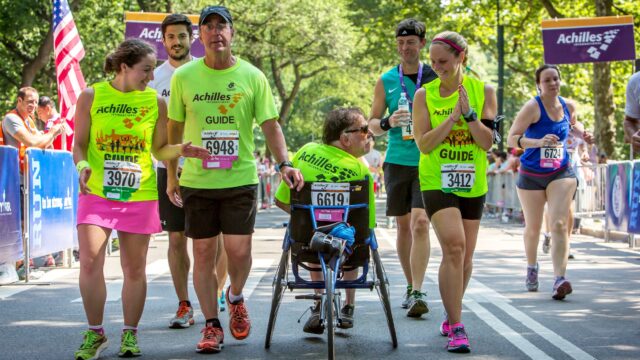
Running USA and Achilles International Webinar: Best Practices for Making Your Race More Accessible
Organizing a race is more than just planning a fast, fun course—it’s about building an event that embraces all athletes, including those with disabilities. On June 10, 2025, Achilles International teamed up with Running USA to host a webinar titled “Best Practices for Making Your Race More Accessible.” Find key takeaways on the Achilles International website here
Panelists Francesco Magisano, Director, NYC Metro, at Achilles International, and Janet Patton, Vice President of Strategic Partnerships, Achilles International, offered a wealth of actionable insights across every stage of race planning—from registration to post-finish celebrations.
1. Registration
Simplify sign-up: Ensure your online process and race forms are compatible with assistive technologies and include accommodations for guide runners.
Gather participant info: Provide options to disclose wheelchair use, handcycles, guides, etc., to tailor support.
Show representation: Use inclusive images and proper alt text to reflect diverse participants.
Facilitate communication: Allow participants to request a guide runner directly and consider offering guides free of charge.
Centralize resources: Create a dedicated web page outlining athlete resources and maintain open email contact for accommodation questions.
2. Pre-Race Planning
Thoughtful logistics: Include accessibility in corrals, announcements, start times, and volunteer/staff training.
Educate volunteers: Teach the difference between racing wheelchairs, handcycles, etc., so support teams and spectators understand and celebrate appropriately.
Clear communication: Warn participants and staff about arrival times for wheeled athletes and potential safety issues.
Facility readiness: Ensure accessible restrooms and bag drop areas; consider ASL interpreters and sensory calm-down zones.
Course insight: Alert athletes and guides beforehand about terrain challenges or layout changes.
3. On-Course Considerations
Barrier-free route: Limit curbs, stairs, narrow paths, cobblestones, and sharp turns—adapt or detour where needed.
Safety protocols: Enforce speed rules, use warning flags or signage, and assign bike escorts when appropriate.
Mechanical aid: Station quick-repair crews for wheelchairs/handcycles; flag low-profile handcycles for better visibility.
4. Post-Race & Celebration
Accessible finish area: Design flow patterns that accommodate adaptive equipment and personal assistants.
Equitable ceremonies: Structure award ceremonies and recovery zones with wheelchair users in mind.
Visible signage: Ensure directional and informational signs serve all athletes.
Acknowledgment: Recognize athletes with disabilities in speeches and awards to elevate inclusion.
Key takeaways: You don’t have to implement everything at once. Even one simple tweak—like adding an accommodation email or guide request field—can make a meaningful difference. These incremental steps pave the way for a more inclusive race experience.
When in doubt, treat athletes with disabilities with the same patience, respect, and care you’d want. At the heart of inclusivity lies empathy—and every thoughtful adjustment enriches the event for all participants.

5 Questions with Keith Hildebrandt, President and Founder of AED Brands
We sat down with Keith Hildebrandt, the President and Founder of AED Brands, to explore a powerful new partnership with Running USA. Under Keith’s leadership—having launched AED Brands back in 2004 with a mission to support compliant, life-saving AED programs nationwide—AED Brands now offers Automated External Defibrillator (AED) rentals specifically tailored for running events through a collaboration with Running USA. Keith shares how this rental program empowers race organizers to enhance on-course safety without the burden of permanent AED installations—making cutting-edge defibrillator access flexible, affordable, and reliable. Learn more as he outlines the program's design and how it’s elevating athlete safety at races across the country.
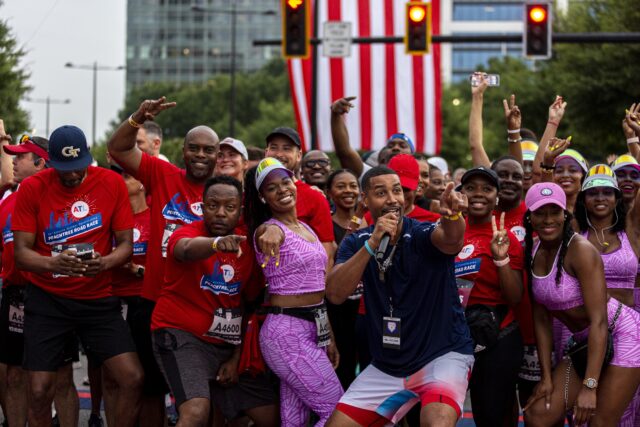
5 Questions with Ronnel Blackmon, Event Emcee
A high-energy host known for his magnetic presence and deep connection to the running community, Ronnel Blackmon brings years of experience as an emcee, announcer, and race day personality at premier running events across the country. His dynamic style and passion for endurance sports have made him a favorite among athletes and race organizers alike. Get to know the emcee of the 2026 Running USA Industry Conference in this new 5 Questions interview with Jay Holder, Running USA Executive Director..

Running USA Insurance Program: What You Need to Know About the Latest Changes
Running USA Executive Director Jay Holder sat down with Nathan Nicholas of Nicholas Hill Group to address updates and improvements to the Running USA insurance program, a foundational member benefit. With market-driven changes taking place, this discussion shed light on what members need to know moving forward. You can view the entire conversation in the video above, and highlights are summarized below.
Why the Change in Insurance Carriers?
Nicholas Hill Group, a longtime insurance partner for Running USA, recently transitioned the program to a new carrier after Everest Insurance exited the market at the end of 2024. This unexpected development, announced around the holiday season, required a swift response.
“We didn’t see it coming,” Nicholas explained. “ We had to pivot quickly and find a new home that aligned with our priorities—stability, simplicity, and affordability.”
Despite the challenges, Nicholas Hill Group secured a new carrier that maintains the program’s core benefits while enhancing its accessibility and operational efficiency.
What's Staying the Same—and What’s Changing?
Same:
Rates per participant: The per-participant fee structure remains unchanged, offering continuity in pricing.
Simple online platform: Members can still complete the entire process—quote, purchase, certificate issuance—in minutes.
Coverage scope: From small charity walks to large ultramarathons, all events continue to be covered under the policy.
Changes:
Minimum Premium and Additional Insured Fees: These upfront costs have increased slightly. Events with fewer than 100 participants may see higher base costs due to the new carrier’s state-filed rates.
Policy Length Limitation: Organizers can currently only insure events up to April 1, 2026. This is a temporary structural constraint based on the one-year term of the master policy and will be extended as the program renews.
Broader availability of optional coverages: Enhancements like liquor liability (for events where alcohol is sold or served by the organizer) are now available in more jurisdictions than before.
Optional Enhancements and Built-In Protections
Nicholas highlighted several optional add-ons that members can use to tailor coverage:
Liquor Liability Insurance: Now available in more locations, this add-on is essential if your event includes alcohol sales or direct service.
Non-Owned Auto Coverage: For events involving volunteer or rented vehicle use.
Participant Accident Coverage: Included automatically, this helps with medical expenses if someone is injured at the event.
Event cancellation coverage—still available—remains a separate offering. Due to increasing weather-related disruptions, it’s more relevant than ever. Nicholas strongly recommended organizers consider it and noted that Running USA has resources to help members evaluate this option.
The Importance of Critical Mass
Why should more Running USA members use this insurance platform?
Nicholas explained: “The more members participate, the more leverage we all have to negotiate better rates and enhanced coverage.” With increased participation comes increased bargaining power—essential for influencing future policy changes, such as addressing coverage gaps for common issues like service animals at races.
"This is your program," he emphasized. "It belongs to Running USA members. The more people who use it and share their experiences, the better we can make it."
How to Sign Up or Learn More
The good news is that the Running USA insurance program has emerged from transition stronger and more capable than ever. With stable pricing, familiar processes, and added flexibility, the program remains a cornerstone benefit for event organizers across the country.
To learn more or secure coverage for your events, visit this webpage. For additional questions, contact membership@runningusa.org.

2026 Emerging Leaders Program Nominations are Open
Nominations are now open for the 2026 Running USA Emerging Leaders Program. This program is designed to support, empower and amplify the voices of the next generation of industry leaders, particularly those from minority and/or women-owned businesses.
Participants selected for the 2026 Emerging Leaders Program will receive no-cost attendance and travel expenses to attend the highly anticipated 2026 Industry Conference presented by haku, taking place in St. Louis, Mo. from Feb. 1-3. This opportunity allows program participants to network with industry professionals, gain insights from seasoned experts, and develop the skills needed to build successful running-related businesses.
“The Emerging Leaders Program not only benefits those who are selected, but it equally benefits every single attendee of the Running Industry Conference presented by haku,” said Jay Holder, Executive Director of Running USA. “Whether it’s your first year or thirtieth year in the running event industry, there is something we can all learn from the emerging leaders.”
The Emerging Leaders Program aligns with Running USA’s mission to strengthen and grow the endurance industry by providing education, advocacy and development resources. By focusing on under-represented organizations, Running USA is committed to fostering diversity and inclusion within the running community.
New this year, nominations for potential program participants will be accepted through July 31, 2025. Nominees will then be invited to apply. You can nominate a candidate here – individuals are welcome to nominate themselves.
The Emerging Leaders program is fully-funded by Running USA, a 501(c)3, mission-focused non profit. To make a donation that will help support this effort, click here.
For more information about the program or questions, contact Michael Clemons at michael@runningusa.org.
About the Industry Conference
Since its origins as a small gathering of Running USA’s founders in Southern California in 2004, the Running USA Industry Conference presented by haku is the best-attended, most esteemed gathering of running industry professionals from around the world. Moving locations each year, the conference has been held in Los Angeles, San Diego, Savannah, Houston, San Antonio, Denver, New Orleans, Puerto Rico, Las Vegas, Orlando, Louisville and heads to