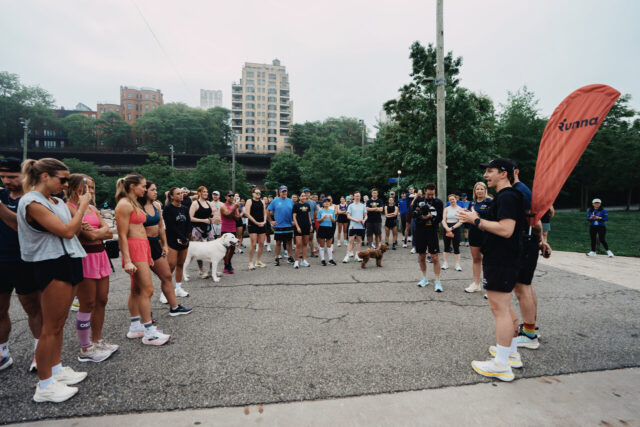
5 Questions with Ben Parker, Co-Founder of Runna
Running USA's Leah Etling sat down with Ben Parker, Co-Founder of Runna, the rapidly growing digital coaching platform transforming how runners train. Ben shares the origins of Runna—from coaching friends at university to building a personalized digital training tool that now supports more than half a million runners daily. He discusses the company’s explosive growth, the recent acquisition by Strava, and how Runna’s technology, culture, and community-first mindset are helping runners of all levels reach their goals and live healthier, happier lives.
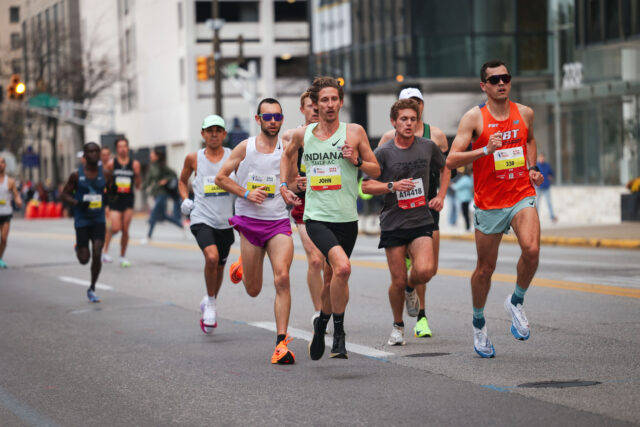
How to Attract Elite Athletes to Your Event
Something that makes running unique from nearly any other sport is that your neighborhood weekend warrior can — and often does — compete in the same races as world-class athletes. Spend a few hours at the finish line of any major marathon, and you’ll likely see Olympians, former college athletes, and beginner runners alike.
Having high-performing athletes at your event can help raise its prestige and grow its popularity. Often, catering to elite, sub-elite, and locally competitive runners is mutually beneficial for these athletes and the reputation of your event.
Here are some things you should consider when planning to host elite athletes and tips for attracting them to your race.
Consider your budget and race size
Not every race is equipped to host the reigning Olympic or World champions, and that’s okay. For the best-of-the-best runners, running is typically their full-time career. These professional athletes, in part, rely on prize money earned from racing to pay their bills and support their families. That’s one reason why you most often see pro runners participating in major races like the Chicago, New York City and Boston Marathons, which offer six- and five-digit prize purses along with hefty appearance fees and highly competitive fields.
Still, this doesn’t mean you can’t attract plenty of talented runners to your event. Most up-and-coming elites, sub-elites, and competitive amateurs have day jobs and don’t expect to earn a substantial check from racing. Instead, they value other perks like discounted race fees, exclusive and convenient accommodations, travel and lodging allowances, and the proper competition and conditions to run a personal best.
Determine your elite time qualification standards
Before considering how you’ll attract elite athletes, you need to determine who qualifies as “elite” at your race. There is no universal time standard for an elite race field; instead your event organizers get to determine it. Additionally, some race organizers update their standards annually — or even throughout the year as race day gets closer and the elite field begins filling up.
Most often, time standards are based on the size, historical competitiveness, and prestige of your race. For example, a recent performance of 3:00:00 for a woman and 2:40:00 for a man may qualify for an “elite” entry at a relatively small, local or regional marathon. Meanwhile, many of the nation’s largest marathons require a time of at least 2:45:00 for women and 2:25:00 for men.
If you’re unsure where to set your time standard, review the websites of a few similarly sized races, or talk with fellow race directors through Running USA. It could be smart to set a similar standard to races comparable to yours. Additionally, keep in mind that a runner’s qualifying time should reflect their current abilities. It is common to require athletes to have run your event’s time standard within two years of your event in order to be considered for the elite field.
Some races offer a two- or three-tiered system, with each tier having stricter time standards and more perks as you move up. For example, the 2025 Indianapolis Monumental Marathon offers elite, seeded elite, and sub-seeded elite categories:
Indianapolis Monumental Marathon elite athlete and pace team coordinator Matt Ebersole said having three athlete tiers enhances the race’s depth and energy. Plus, it empowers young and developing athletes. He said he doesn’t want the elite race to be so much faster than the general one that they “essentially become two separate races.”
“I love standing at the finish line, and, after the first runner comes by, they just keep coming,” Ebersole said. When it comes to developmental athletes, including those hoping to qualify for the Olympic Trials, he said, “We can give them a taste of that elite treatment. It’s great for up-and-coming runners to come into an elite area and see people they know or maybe follow on social media. After the race, that inspires them to train harder and do what they need to do to get to that level.”
As you can see in the Indy example, while the time standard is often based on the same race distance as your event, it doesn’t have to be. If you plan to offer equivalent time standards (such as permitting a half marathon or 10K time to qualify an athlete for an elite marathon field), it could be helpful to use free online tools like the McMillan Running Calculator to determine equivalent performances.
Here’s how Indy’s elite “perks” increase with each tier:
Having different levels of perks allows Indy to provide more runners with the elite treatment while being cognizant of physical space and financial resources. “We want to make sure (the elites) are having a great experience while not taking away from the experience of anyone else,” Ebersole said.
Should you ever make exceptions to your time standard?
Ebersole shared that while he doesn't make many exceptions to Indy’s posted time standard, he thoroughly looks at every application to see where and when each athlete ran their qualifying time.
“If someone’s close and they ran it on a downhill course, then it’s a no,” he said. “If they ran close on a hot day at the Boston Marathon, then yes … or if someone was pregnant last year and doesn't have a recent performance but they have a strong history of racing well over the last several years. So, it depends on the situation.”
Encouraging elites to register for your event
Word spreads quickly in the running community. Elite participants will likely tell their friends, training partners, and teammates if your race was well organized, competitive, and fun.
But, if your race is new or returning after a long hiatus, it’s crucial to promote it and connect with athletes online and in-person if you want competitive runners at your start line.
Here are some helpful tips:
● Have a designated elite athlete coordinator on your team who can advise the team on decisions regarding the elite field, answer questions from elite athletes and their coaches, and go through applications for the elite field.
● Connect with high school varsity, collegiate, sub-elite, and elite teams in your city, state, or region. Offer discounted or free entries to anyone on the team interested in signing up for your event. With high school and college teams, be aware that athletes may be unable to participate in your event during their fall and spring competition seasons.
● Contact your local running clubs and running specialty stores. See if they can help connect you with nearby runners who meet your time standards or can suggest athletes for you to contact.
● Don’t be afraid to reach out if you know of an elite athlete of any level who has a personal, geographic, or other connection to your event (perhaps your race benefits a cause they’re passionate about). Some runners, including top performers, may surprise you with their willingness to participate. Even if a runner can’t compete in your event, they may be interested in making an expo or finish-line appearance.
● With the athletes’ permission, feature elite participants on social media ahead of your event. Ask the athletes to share on video or in writing what inspired them to sign up for your event, how they are preparing, and what they hope to achieve. Share these posts on your event’s social media accounts and encourage featured athletes to repost them. If a runner’s training partners, teammates, and competitors see that they’re excited about your event, they’re more likely to check it out themselves and possibly register. As mentioned, high-level runners are attracted to opportunities to push themselves in a competitive field. If an elite runner knows that many athletes of their caliber have enthusiastically signed up for a race, they won’t want to miss out!
A note on agents: When working with the highest level of elite runners (think Olympic and/or professional), you’ll likely communicate with the athlete’s agent rather than the runner themselves. Top athletes pay their agents to negotiate entry into races, including appearance fees. Agents also assist with travel and lodging arrangements.
What perks are elite runners looking for?
Below are some common perks that are attractive to (and sometimes expected by) elite runners. If you plan to offer any of these at your race, be sure to publicize them on your event website and social media so athletes are aware prior to registration.
1. Free or discounted race entries: Many races offer free or discounted registration fees to athletes who meet certain time standards. Sometimes, this is the same standard required for entry into the elite field. Other times, an even faster qualifying time is required for a free entry while “slower” elites receive a discount. Like time standards, you can implement multiple discount tiers.
2. Lodging and travel stipends: Some races, especially larger ones, offer travel stipends and/or lodging for elite athletes. This is less common at smaller races. Again, you should consider the size and budget of your event. See the travel and lodging perks offered at the 2025 Grandma’s Marathon:
3. Elite bottle stations: Any good race will have water, electrolytes, and possibly other aid stations along the route. However, many high-level athletes prefer a special hydration or nutrition blend unique to their needs, especially in longer-distance races like a marathon. If you’re hosting elite marathoners, highly consider providing elite bottle stations — exclusive tables throughout the race where elites can easily grab their special, in-race nutrition. Be sure to arrange a way for athletes to provide your staff/volunteers with their bottles ahead of time.
4. Special pre-race waiting area: Help ease race morning stress by offering an elites-only, pre-race waiting area near the start line of your event. Athletes will probably be most grateful to have elites-only bathrooms and skip the porta-potty line! Also consider providing water and space for runners to stretch and warm-up before the race.
5. Prize money and record bonuses: Even if you can’t offer thousands of dollars to the athletes who make your event’s podium, consider awarding small prizes to the top three or five finishers in the elite field. Many races also offer additional monetary bonuses for breaking the event’s course record. Make sure to publish the current record and bonus prize amount ahead of time to encourage athletes to go for it!
RRW: What Did it Take to Earn $1000 at a Road Race in 2024?
(c) 2025 Race Results Weekly, all rights reserved. Published with permission.
(16-May) -- A woman running a 2:38:49 marathon. A man running a 14:06 5K. A woman running a 34:34 10K. A man running a 1:04:14 half-marathon.
What did all of those 2024 road running performances have in common? They all generated a $1000 prize money payment, just four of a total of 235 one thousand dollar (or one thousand euro) payments recorded by Race Results Weekly (RRW) last year. RRW sifted through the results of thousands of road races to determine what it took to make $1000 in prize money.
Not surprisingly, the range of those performances was very broad, from truly world-class marks to times more typically associated with recreational runners.
For instance, in the marathon --where RRW flagged 90 one thousand dollar payments (45 to men and 45 to women)-- the average time to earn $1000 was 2:39:10 for women and 2:16:37 for men. The average finish place for $1000 payments was 5.4 for women and 5.5 for men. The range of times to earn $1000 was huge, from 2:23:52 to 3:10:24 for women, and 2:07:09 to 2:30:50 for men.
At the top end of the performance scale, Kenya's Linet Masai finished seventh at the Mainova Frankfurt Marathon last October in 2:23:52 and earned €1000 (equaling $1080 at the time). On the men's side, Italy's Eyob Faniel finished seventh at the Zürich Maratón de Sevilla in 2:07:09, also earning €1000. For comparison, running the same times at the TCS New York City Marathon a week later, both Masai and Faniel would have earned $100,000 and been the race winners (theoretically, at least).
At the other end of the scale, American Meredith Steely ran 3:10:24 (2nd place) at the high-altitude Boulderthon Presented by Puma in Colorado and earned $1000, the slowest marathon mark in the RRW list. At the same race Esteban Trujillo finished second on the men's side and clocked 2:30:50. His performance was also good for $1000.
Looking across the most popular distances, these were the fastest and slowest performances to earn $1000 (or €1000):
Fastest marks to earn $1000:
Men Women
Mile 3:51.9 4:20.4
5K 13:44 15:25
10K 27:29 30:38
Half-Marathon 59:21 1:07:08
Marathon 2:07:09 2:23:52
Slowest marks to earn $1000:
Men Women
Mile 4:09.1 4:44.5
5K 14:10 16:47
10K 30:23 36:38
Half-Marathon 1:08:21 1:18:35
Marathon 2:30:50 3:10:24
Comparing results over a range of distances and events highlighted the diversity of the global road running scene. Some races use pacemakers and are speed-oriented, while others are held championship-style with no pacers. Some events have flat courses at sea level, while others are contested on hilly courses at altitude. Some events pay larger appearance fees in relation to their prize money, while others pay no appearance fees and only offer prize money. Some races have travel budgets which allow top athletes to participate no matter where they live, while others have no travel budget and can only support athletes who live near the race.
In addition many organizers offer special prize money for home-country athletes, and this is especially true in the United States. For instance, Race Results Weekly only credited Henry Wynne for the $1000 he earned for eighth place at the Asics Falmouth Road Race last August. However, he also earned an additional $2000 for being the second American.
A complete list of all of the payments is here (file sorted chronologically, from January to December):
https://docs.google.com/spreadsheets/d/1TVlun8M7xh4ysw3GLstGNTRsTAPOGoK7sYy-uRGkiuw/edit?usp=sharing
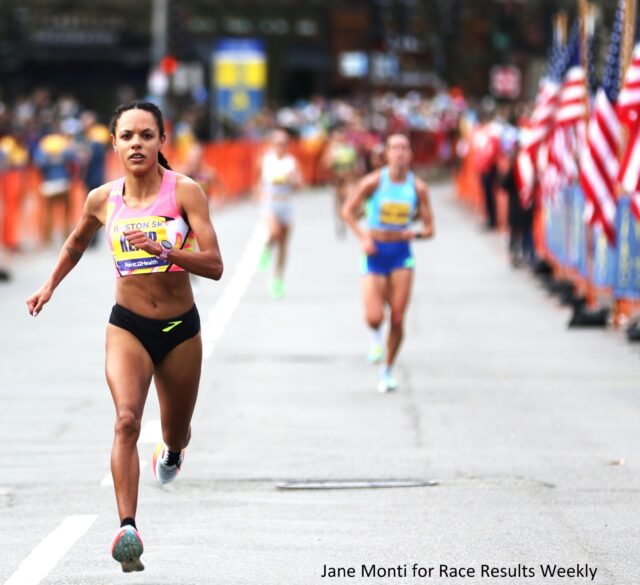
PHOTO: Erika Kemp finishing fifth in 15:25 at the 2024 Boston 5-K presented Point32Health where she earned $1000 in prize money (photo by Jane Monti for Race Results Weekly)
Customer Service Virtual Roundtable - May 2025
Running USA’s Virtual Roundtables resumed the important conversations sparked during the 2025 Industry Conference and will now continue on a quarterly basis. These sessions provide a valuable forum for professionals across the running industry to reconnect, exchange ideas, ask questions, and seek advice from peers within their specific sectors. By extending the dialogue beyond the annual conference, the roundtables help foster collaboration, innovation, and shared problem-solving throughout the year.
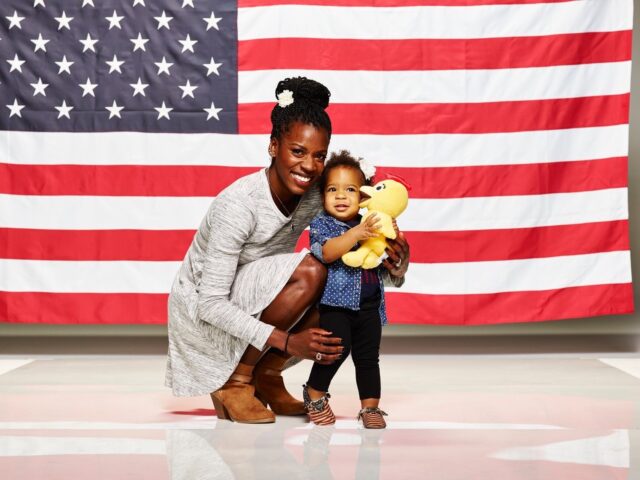
5 Questions with Alysia Montaño of For All Mothers+
Olympic medalist, Global medalist and seven-time USA Track and Field National Champion, Alysia Montaño has used her platform to initiate a movement that has changed the dialogue around the capabilities and experience of professional athletes when they become mothers. As an athlete, author, analyst, and entrepreneur, Alysia has experience in building a brand while building partnerships and community. She continues to channel these gifts as well as her ability to inspire others to demand and make change. She talked to Running USA's Leah Etling about her non-profit, For All Mothers+, and it's efforts to lead the way for mothers in sport and everywhere.